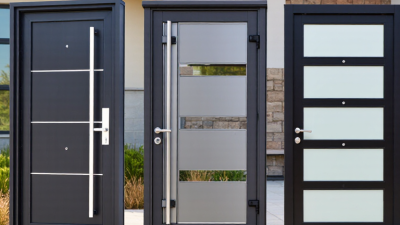
Top Residential Door Manufacturers in China

China’s residential doors market offers buyers a wide range of steel security doors, timber interiors, and aluminum entrance systems. The real challenge is comparing manufacturers beyond polished catalogs and attractive factory prices. Details matter. A door that looks impressive online may arrive with uneven veneer, weak hinges, or poorly fitted weather seals. This guide examines Chinese manufacturers through practical purchasing criteria: material specifications, production consistency, documented testing, customization, and after-sales support.

Energy performance deserves attention. UNEP’s 2023 Global Status Report for Buildings and Construction attributes 34% of global energy demand to buildings and construction in 2022. The sector also generated 37% of energy- and process-related carbon emissions. These figures concern the entire sector, but they explain why better-performing building components deserve scrutiny. For residential doors, buyers should examine thermal transmittance, air leakage, and installation requirements alongside appearance. Architect and residential-design authority Frank Lloyd Wright expressed a relevant principle: “Form and function should be one, joined in a spiritual union.” His architectural perspective provides useful context, although it cannot replace specialist door testing.

Specifications need proof. A manufacturer’s fire-resistance claim should identify the tested assembly, applicable standard, and supporting laboratory documentation. Security performance also depends on the frame, locks, hinges, and installation—not simply the thickness of the door leaf. This comparison has limits: published specifications cannot establish how consistently every factory fulfills orders. Samples, independent inspections, and clearly written contracts remain essential when selecting residential doors from China.
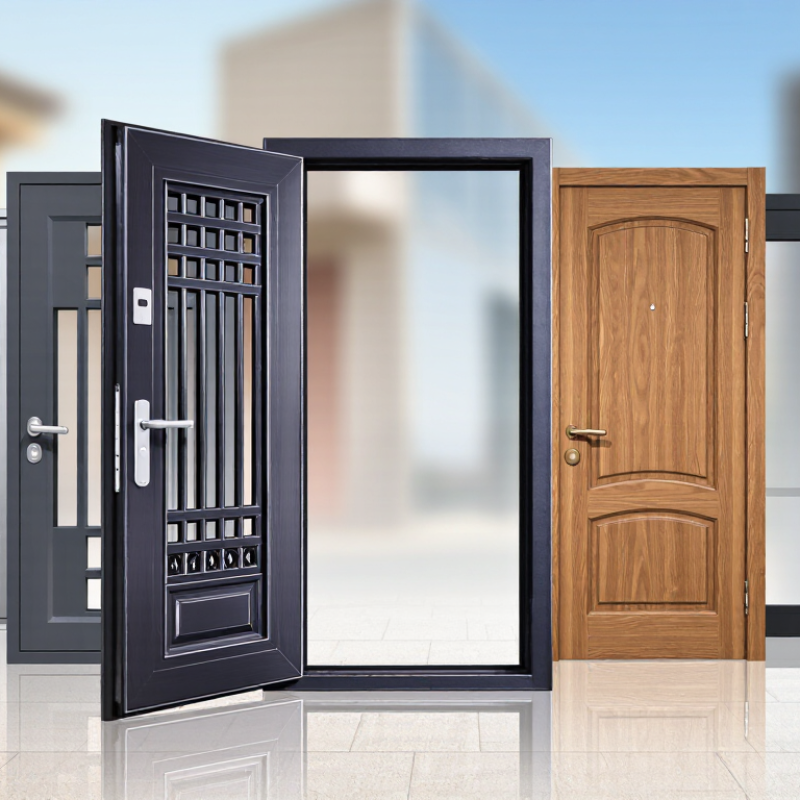
Top Residential Door Manufacturers in China

Overview of China’s Residential Door Manufacturing Industry

China’s residential door industry serves apartment developments, private homes, renovation projects, and overseas buyers. Manufacturing clusters in Zhejiang, Guangdong, and Sichuan support access to hardware, panels, coatings, and skilled labor. Products range from steel entrance doors to solid wood, engineered wood, and aluminum interior doors. Material choices matter. A bathroom door faces moisture exposure, while a bedroom door may prioritize sound reduction and privacy. These differences influence core construction, surface finishes, frame design, and hardware selection.

Production commonly combines panel cutting, pressing, surface treatment, hardware installation, and final inspection. Larger factories may automate cutting and finishing, although automation alone does not guarantee consistent quality. Buyers can request cross-section samples showing core materials, edge sealing, and reinforcement around lock positions. Check the edges. Uneven gaps, exposed substrate, or poorly fitted hinges can reveal assembly problems before installation. For acoustic or fire performance, request applicable test reports covering the specified door assembly, including its frame and seals.

Selecting residential door manufacturers also involves practical tradeoffs between customization, lead times, and replacement support. A factory offering hundreds of finishes may still struggle to match colors across separate production batches. That deserves closer attention than a polished showroom display. Samples are useful, but they cannot fully represent every unit in a large order. Written specifications should define dimensions, finish tolerances, packaging, and inspection procedures before production begins.

Criteria for Evaluating Leading Residential Door Manufacturers

Evaluating leading residential door manufacturers in China starts with matching each door to its intended location. An apartment entrance needs different security, acoustic, and weather protection than a bedroom door. Request specifications for leaf thickness, core construction, frame material, and hardware compatibility. Check the details. For moisture-prone rooms, ask how exposed edges are sealed and whether humidity testing covers the complete assembly. A polished showroom sample reveals little about consistency across a shipment of 200 doors.

Reliable evaluation depends on documents that match the product being purchased. Ask for test reports identifying the model, test method, issuing laboratory, and tested configuration. Fire resistance or sound insulation claims should apply to the supplied assembly, including frames, seals, and hardware. Numbers need context. A laboratory rating may not reflect performance after installation gaps or unsuitable wall fixings are introduced. Factory audits can examine incoming material checks, batch traceability, and how rejected doors are handled.

Commercial reliability deserves equal attention because a low quotation can hide practical costs. Compare packaging, replacement hardware availability, installation instructions, warranty exclusions, and responsibility for shipping damage. Approve a production sample, then record agreed dimensions, finishes, and acceptable defects in the purchase specification. Even this approach has limits: one approved sample cannot prove that every production batch will match. Where practical, arrange random inspections before dispatch and agree on remedies for doors that fail the documented requirements.

Profiles of Top Residential Door Manufacturers in China

China’s residential door manufacturers can be profiled by their materials, production methods, and intended housing applications. Solid wood specialists typically emphasize timber selection, moisture control, and consistent finishing. Their product ranges may include oak veneers, recessed panels, and matching frames for apartment interiors. Details matter. A useful supplier profile should explain whether panels use solid timber, engineered cores, or decorative veneers. These distinctions affect weight, maintenance, and responses to seasonal humidity.

Manufacturers focused on steel entrance doors require a different assessment. Relevant details include steel sheet thickness, frame construction, hinge reinforcement, and the fit around locking points. Buyers should request measurements for the actual model, since photographs cannot establish construction quality. Check the edges. Uneven coating inside a frame rebate can reveal finishing weaknesses that polished catalog images conceal. Any claimed fire resistance or acoustic performance should have supporting test documentation identifying the tested door assembly.

Engineered interior door producers often compete through standardized dimensions, finish choices, and coordination with residential fit-out schedules. Their profiles should describe core materials, edge sealing, hardware preparation, and packaging for transport. A white showroom sample may look convincing, but it says little about consistency across fifty delivered doors. That is an easy detail to underestimate. Even a detailed profile remains incomplete without recent production samples and clearly documented tolerances. Buyers can compare corner protection, surface color, and hinge alignment across several units from the same order.

Top Residential Door Manufacturers in China - Profiles of Top Residential Door Manufacturers in China
Manufacturer Profile Typical Residential Applications Common Materials and Construction Product Characteristics Key Purchasing Checks Performance Limitations
Steel Security Door Manufacturers Apartment entrance doors and house entrance doors. Steel door leaves and frames, reinforced lock areas, and internal reinforcement or infill; configurations vary by model. Products designed for security can incorporate multipoint locking, concealed hinges, and electronic locks. Request security test reports for the complete doorset, lock specifications, steel thickness details, and corrosion protection information. Steel construction alone does not establish a security rating. Fire resistance, insulation, and sound reduction require separate evidence.
Solid Timber Door Manufacturers Interior rooms and exterior entrances where the timber species, construction, and finish suit the exposure. Solid wood components assembled into panelled or other joinery-based door designs. Natural grain and species-dependent appearance; many designs can be refinished. Confirm timber species, moisture control, joinery, finish, maintenance requirements, and suitability for the installation environment. Timber can expand, shrink, or distort with changes in moisture. Exterior use requires suitable detailing and protection.
Engineered Wood Door Manufacturers Bedroom doors, study doors, and other interior openings. Engineered timber or composite cores with veneer, MDF, HDF, laminate, or painted surfaces; both solid-core and hollow-core constructions are available. A wide range of finishes and constructions allows different appearance, weight, and cost options. Check the core specification, edge construction, hardware fixing points, finish quality, and applicable formaldehyde emission documentation. Products with similar surface finishes can have substantially different cores. Standard interior products may be unsuitable for prolonged moisture exposure.
Moulded Interior Door Manufacturers Bedrooms, closets, and other internal spaces. Moulded fibreboard door skins attached to a supporting frame with hollow or solid infill. Repeated panel patterns support consistent styling across multiple rooms. Confirm skin material, core type, perimeter framing, permissible trimming, and hinge and lock reinforcement. Hollow-core construction generally provides less sound isolation than comparable solid-core construction. Moisture suitability depends on the specified materials and finish.
Aluminium-Framed Door Manufacturers Balcony doors, patio doors, glazed entrances, and internal glazed partitions. Extruded aluminium frames with glass or opaque infill; sliding and hinged systems are available, with or without thermal breaks. Frames support large glazed openings. Thermal-break designs reduce heat transfer through the frame compared with otherwise comparable non-thermal-break designs. Review whole-product thermal performance, air leakage, water penetration, wind resistance, glazing safety, and hardware specifications. Performance depends on the complete system, including glazing, seals, drainage, installation, and frame design.
uPVC Door Manufacturers Balcony doors, patio doors, and glazed residential exterior openings. Multi-chamber uPVC profiles, glazing or insulated panels, gaskets, and reinforcement where required by the system design. Profiles do not require painting for corrosion protection and can accommodate insulating glass units. Check reinforcement, permitted door dimensions, glazing specification, drainage, weather seals, and climate suitability. Thermal expansion and structural requirements affect allowable sizes and reinforcement. Product quality and installation influence long-term operation.
Wood-Plastic Composite Door Manufacturers Interior rooms and moisture-prone locations where the specific product is approved for use. Wood flour or other plant fibres combined with thermoplastic materials; formulations and internal structures vary. Composite construction can reduce moisture sensitivity compared with some untreated wood-based materials. Verify material composition, water absorption data, screw-holding capability, dimensional stability, and the stated service environment. Water resistance, fire behaviour, and durability vary by formulation. A WPC designation does not establish a universal performance rating.
Fire-Rated Residential Doorset Manufacturers Apartment entrances and other residential openings requiring fire separation under applicable building rules. Tested assemblies using steel, timber, or other approved constructions, together with specified frames, seals, glazing, and hardware. Fire performance applies to the tested or approved doorset configuration. Verify the required fire classification, test or certification documents, permitted dimensions, hardware schedule, and installation instructions. Changing the leaf, frame, glazing, seals, or hardware outside the approved configuration can invalidate the claimed performance. Smoke control requires its own supporting evidence.

Scope: This table describes residential door manufacturing categories represented in China. It does not rank or identify individual companies. Materials and features are typical industry configurations, not specifications shared by every manufacturer. Confirm all security, fire, acoustic, thermal, and environmental claims using documentation for the exact product and the requirements of the destination market.

Door Types, Materials, and Manufacturing Standards

Comparing leading residential door manufacturers in China starts with door types, materials, and documented manufacturing standards. Hinged timber doors suit bedrooms, while sliding systems save clearance in compact apartments. Steel entrance doors need particular attention to frame anchoring, corrosion protection, and lock reinforcement. Details matter. For bathrooms, inspect the bottom edge: exposed engineered wood can swell after repeated wetting. Solid timber offers repairability, but moisture changes can cause movement; engineered cores depend heavily on construction quality and edge sealing.

Material selection also affects indoor air quality and energy performance. China’s GB/T 39600-2021 classifies formaldehyde emissions from wood-based panels as E1, E0, and ENF. Their respective limits are 0.124, 0.050, and 0.025 mg/m³. These classifications concern panels, so a core-material certificate alone cannot establish the emissions performance of an assembled door. Request relevant test evidence. UNEP’s 2022 Global Status Report found buildings and construction represented 34% of global energy demand in 2021. For exterior doors, that context makes insulation, perimeter seals, and installation gaps worth examining alongside appearance.

Manufacturing standards become useful when purchasing requirements specify measurable performance. GB/T 7106-2019 provides testing methods for exterior doors’ and windows’ air permeability, watertightness, and wind resistance. Ask manufacturers for reports matching the proposed construction, dimensions, and hardware configuration. Inspect hinge alignment, latch engagement, gasket continuity, and finish coverage on concealed edges. A showroom sample cannot reveal every production inconsistency. Even an attractive sample leaves uncertainty about batch quality, making agreed inspection criteria and production checks valuable before shipment.

Residential Doors in China: Comparing Common Material Densities

Typical material densities for steel, aluminum, and soda-lime glass used in residential door construction. Values describe the materials themselves and are not manufacturer or brand statistics.

Typical material density: steel — 7,850 kg/m³; aluminum — 2,700 kg/m³; soda-lime glass — 2,500 kg/m³.

Steel is commonly used in security entrance doors, while aluminum and glass are used in framed, sliding, and glazed door systems. At equal material volume, steel weighs approximately 2.9 times as much as aluminum. Finished door weight also depends on panel thickness, frame design, core materials, and hardware. Density alone does not establish manufacturing quality, security, or fire resistance; these require applicable standards and testing of the complete door assembly.

Sources: Engineering ToolBox — Densities of Metals and Alloys; Engineering ToolBox — Densities of Solids. Values are rounded, representative reference densities; actual density varies with composition and temperature.

Supplier Selection, Customization, and Export Considerations

Finding top residential door manufacturers in China requires more than comparing catalog photographs or quoted prices. Check production records. Ask whether cutting, finishing, and assembly happen in-house or through subcontractors. Request recent inspection reports and verify that test documents match the exact door construction you intend to purchase. A polished showroom offers limited evidence of consistent production quality.

Customization starts with precise measurements, including frame depth, finished floor height, opening direction, and hardware positions. Specify the core material, surface finish, edge treatment, and acceptable dimensional tolerances in writing. For humid locations, ask how exposed edges are sealed. Approve a sample. A slight color difference may seem harmless, but adjoining doors can make that variation conspicuous after installation. Samples are imperfect predictors of bulk production, so agree on inspection criteria before paying a deposit.

Export planning should cover destination requirements, packaging, shipping terms, and responsibility for damage claims. Requirements vary by market and intended use; confirm applicable fire, emissions, and labeling rules with a qualified local adviser before ordering. Request corner protection, moisture protection suited to the route, and clear carton labels identifying each opening. Compare quotations using the same specifications and named Incoterms location. Leave room for delays and replacement parts, especially when custom finishes would make a small reorder expensive.

About Us

Andy’s Glass & Window Company of Temecula Valley has been servicing the glass, window and door needs of Southern California since the 1970′s. Operating from a 10,700sf commercial building in Murrieta, California, a neighboring town of Temecula.

Contractor’s License #821172

Andy’s Glass & Window Company

25751 Jefferson Ave, Murrieta, CA 92562

(951) 677-7421

sale@johnsonwindowtint.com

Store Hours:
Monday - Thursday 8:00 am - 5:00 pm
Friday 8:00 am - 4:30 pm
Closed Saturday & Sunday

Visit Us

Contact Information
Andy's Glass & Window Company