2026 Best Types of Glass Front Doors?
Choosing among the best types of glass front doors in 2026 requires more than chasing a striking photograph. The right door must balance daylight, security, insulation, privacy, and daily comfort. A narrow entry may need a full-height glazed panel, while a sunny southern exposure may benefit from low-E glass and a shaded overhang. Small details matter. Gaskets, hinges, thresholds, and frame depth can affect performance as much as the glass itself.
Mark Meshulam, a building-envelope consultant and glass-performance educator, offers a useful principle: “Glass is not just a hole in the wall; it is part of the wall.” That perspective changes the buying process. Consider the entire door system, including the frame, glazing package, weather seals, hardware, and installation quality. Tempered glass can improve impact safety, while laminated glass may provide better security and sound control. Frosted, fluted, or tinted options can soften visibility without losing natural light.
The most attractive option is not always the most practical one. A dramatic pivot door may demand careful weather protection and regular adjustment. Wood can add warmth, but it needs maintenance. Fiberglass can be easier to manage, though its texture may feel less authentic. Steel looks crisp and strong, yet thermal performance depends heavily on its construction.
This guide compares the leading glass front doors for 2026. It examines materials, glass styles, energy ratings, privacy, upkeep, and installation concerns. Always confirm local requirements with a qualified door professional. A small mistake at the threshold can become a costly comfort problem.
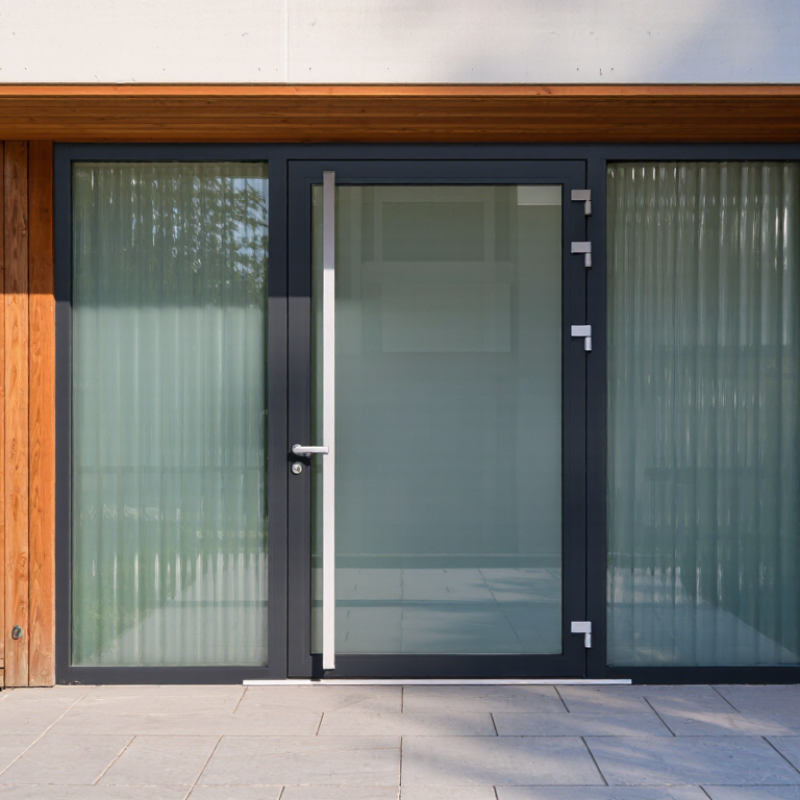
What Are Glass Front Doors and How Do They Differ?
2026 Best Types of Glass Front Doors
Glass front doors combine a door frame, safety glazing, hardware, seals, and a locking system. They bring daylight into an entryway while keeping the entrance functional. Their differences mainly come from glass construction, frame design, and opening style.
A framed glass door has visible wood, fiberglass, or metal around the panel. It usually offers a familiar appearance and easier weather sealing. Frameless designs create cleaner views, but they demand precise installation and stronger hardware. Insulated glass contains two panes with a sealed space between them. This design can reduce drafts and outside noise. Low-emissivity coatings may also limit unwanted heat gain. Hinged doors suit traditional entrances, while sliding systems need enough wall space and careful track maintenance.
Clear glass feels open, but privacy can become uncomfortable at night. Frosted, textured, or tinted glass changes that experience. I have seen attractive doors perform poorly when installers overlook threshold drainage. Small details matter. Door weight also affects hinges, handles, and long-term alignment.
Tips: Check the glass safety rating and frame seals before comparing styles. Ask how the door handles rain, strong sunlight, and temperature changes. View a sample near your actual entryway, not only in a showroom. A darker finish may show dust quickly. That is easy to forget.
| Glass Front Door Type | What It Is | Natural Light | Privacy Level | Safety Characteristics | Energy Performance | Maintenance | Best For |
|---|---|---|---|---|---|---|---|
| Clear Tempered Glass | Transparent glass that has been heat-treated to increase strength. When broken, it usually breaks into small, relatively blunt granules instead of large sharp shards. | Very high | Low | Commonly used in doors because tempered safety glass is more resistant to thermal stress and impact than ordinary annealed glass. | Moderate by itself; performance improves when used in a double-glazed insulated unit with a suitable coating. | Easy to clean, but fingerprints, water spots, and interior views are highly visible. | Bright entrances, contemporary homes, and locations where visibility is desirable. |
| Low-E Insulated Glass | A double- or triple-glazed unit with a microscopically thin low-emissivity coating that reduces radiant heat transfer. The space between panes is commonly sealed and may contain air or an insulating gas. | High, depending on coating and tint | Low to medium | Often combined with tempered or laminated safety glass for door applications; the complete assembly must meet applicable safety-glazing requirements. | High compared with single-pane glass. It can reduce heat loss in cold weather and unwanted solar heat gain when the correct coating is selected. | Clean the exposed outer surfaces normally; damaged seals or condensation between panes may require replacement of the insulated unit. | Year-round comfort, energy-conscious renovations, and homes with large glazed entry areas. |
| Laminated Safety Glass | Two or more glass layers bonded with a plastic interlayer. If the glass cracks, the interlayer helps hold the broken pieces together. | High to medium, depending on interlayer and design | Low to medium | Provides post-breakage retention and can reduce the risk of glass falling apart. It may also improve sound reduction and resistance to forced entry, although performance depends on the complete door system. | Moderate by itself; can be combined with insulated construction and low-E coatings. | Similar to other glass types; inspect edges and seals for damage. | Entrances where security, sound control, or retained-glass safety is important. |
| Frosted or Acid-Etched Glass | Glass with a translucent surface created through acid etching, permanent surface treatment, or a comparable manufacturing process. | Medium to high, with diffused light | High | Privacy treatment does not automatically make the glass safer; it should still be specified as tempered or laminated safety glazing when required. | Moderate unless incorporated into a double-glazed low-E unit. | Permanent etched finishes are generally durable, but abrasive cleaners can damage some treated surfaces. | Entryways that need daylight while limiting clear views from outside. |
| Obscure or Patterned Glass | Rolled or textured glass with a patterned surface that distorts images and reduces direct visibility. | Medium to high, depending on pattern depth | Medium to high | Patterning is a privacy feature, not a safety classification. Tempered or laminated construction may be selected for door safety. | Moderate as a single pane; higher when combined with insulated low-E construction. | Raised textures can collect dust and may require careful cleaning with a soft cloth. | Traditional, transitional, or privacy-focused entrances. |
| Tinted or Solar-Control Glass | Glass with color or a solar-control coating that absorbs or reflects part of the sun’s visible and infrared energy. | Medium to high, depending on tint darkness | Medium during daylight; privacy decreases at night when interior lights are on | Safety depends on whether the glass is tempered or laminated; tint alone does not provide impact safety. | Can reduce glare and solar heat gain. Very dark glass may increase heat absorption and should be selected according to climate and orientation. | Generally easy to clean; scratches or coating damage may be more noticeable on dark surfaces. | Sunny façades, glare-prone entrances, and homes seeking a stronger exterior color contrast. |
| Decorative Leaded or Divided-Light Glass | Glass arranged with decorative lines, caming, muntins, or separate panes to create a traditional or custom appearance. | Medium to high | Low to medium, depending on the glass used | Safety depends on the underlying glass and construction. Decorative elements do not replace required safety glazing. | Varies widely; insulated units generally perform better than single-pane decorative designs. | More joints and decorative details can increase cleaning time. Caming and sealants should be inspected periodically. | Craftsman, heritage-inspired, traditional, and custom architectural styles. |
| Reflective or Mirrored Glass | Glass with a reflective coating or finish that reflects part of the visible light and solar energy. | Medium; interior brightness can be reduced | Medium to high during daylight, but limited at night if the interior is brighter | Reflective properties do not determine safety; tempered or laminated glass may still be required. | Can reduce glare and solar gain, but results depend on the coating, climate, orientation, and glazing configuration. | Coatings may require non-abrasive cleaning and careful handling. | Modern façades, strong daylight exposure, and entrances requiring daytime privacy. |
Note: Actual performance depends on the complete door assembly, including the frame, weatherstripping, spacer, glazing configuration, installation quality, climate, and local safety requirements. Verify applicable building codes before selecting a glass front door.
Related Posts
-
What Are the Top Glass Front Doors for Global Buyers?
-
China Top Glass Front Doors for Your Home Design Needs?
-
Top 5 Tips for Choosing Glass Front Doors for Your Home?
-
2026 Best Types of Glass Doors for Global Buyers
-
Top 10 Stunning Glass Front Doors to Enhance Your Home Aesthetic
-
How to Choose the Best Glass Doors for Your Home Upgrade