Why Are Sliding Closet Doors So Popular?
In many homes, every inch of floor space has a job. A hinged door needs room to swing, which can interfere with a bedside table, laundry basket, or narrow walkway. Sliding closet doors move along a track instead, keeping their panels close to the wall. That small change can make a tight bedroom feel easier to use. It is practical, not magic.
Their appeal is not only about saving space. Mirrored panels can brighten a dim room and make it feel more open, while wood, glass, or painted finishes can suit different decorating styles. Looks matter. For renters or homeowners updating a room, replacing a door may also feel like a manageable refresh. Still, a stylish panel does not guarantee smooth operation; track quality and careful installation matter.
Sliding doors do have trade-offs. Because the panels overlap, part of the closet opening stays covered at any one time. That can make it harder to reach wide shelves or move bulky items in and out. Dust may collect in the lower track, too, especially in busy rooms. Not every layout benefits equally. Before choosing, measure the opening, check the available wall and floor space, and consider how often you need full access. This guide explores why closet doors of this style remain popular, what they do well, and where their limitations deserve a closer look.
How Sliding Closet Doors Work
Why Are Sliding Closet Doors So Popular?
How Sliding Closet Doors Work
A sliding closet door travels sideways along a track instead of swinging into the room. In many designs, rollers attached near the top of each panel carry its weight. A floor-mounted guide keeps the panels from swinging forward or rubbing against each other. Some systems use a lower track to support the doors, so the exact setup depends on the hardware.
With bypass doors, one panel slides in front of another. This saves the floor space a hinged door needs, but it also means only part of the closet opening is clear at once. The rollers should move smoothly, without scraping or jolting. A little noise can point to dust in the track, a loose fastener, or a panel that needs realignment. That matters. Keep the track free of lint and check that the bottom guide sits securely. Avoid forcing a stuck door; it can strain the rollers or pull the panel out of alignment. The design sounds simple, but small installation differences can affect how well a door glides over time.
How Their Design Saves Space
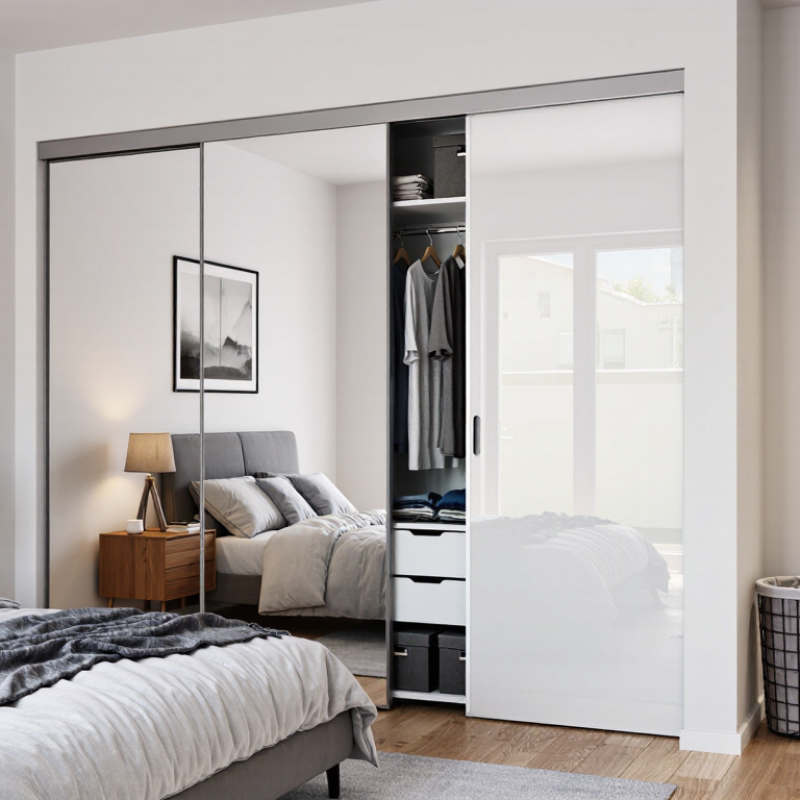
Sliding closet doors are popular partly because they move sideways instead of swinging into a room. Their panels travel along a track, so furniture can sit closer to the opening. That difference is useful in compact bedrooms, where a hinged door might strike a bed, dresser, or laundry basket. A narrow walkway feels less crowded when the door does not need a clear arc. No extra clearance. The saved area may be modest, but it can make everyday movement easier. When measuring, account for the track and overlapping panels; the opening will not expose its full width at once.
This can help when arranging shelves or a small desk near the closet. A slim shoe rack may fit beside the doorway without blocking a door’s swing. Mirrored panels can also reflect light and make a small room feel more open, though they do not increase its actual floor area. Sliding doors have trade-offs. Dust and lint can collect in the lower track, and panels may not glide smoothly if the track is dirty or misaligned. A slightly uneven floor can make installation trickier, too. Check the opening carefully before choosing panel sizes, and leave room for the panels to overlap as they slide.
The Practical Benefits of Sliding Closet Doors
Sliding closet doors make practical use of limited floor space. Unlike hinged doors, they do not swing into a bedroom or hallway. That can leave room for a bedside table, laundry basket, or a clearer walking path. A useful difference in a small room.
Their wide panels can also make everyday storage easier to access. Open one side, and shirts, shelves, or storage boxes are within reach. Mirrored panels can reflect daylight from a nearby window, helping a dim room feel brighter. The effect depends on the room’s layout and light.
Sliding doors need less clearance, but they are not maintenance-free. Tracks can collect dust and lint, especially near the floor. A quick vacuum and occasional wipe help the panels move smoothly. Check that the track is straight, too. Even a small misalignment can cause sticking or rattling, and forcing the door may worsen it. Some storage remains hidden behind the overlapping panels, so reaching items at the far edge can take a little planning. That trade-off is easy to overlook.
Styles and Materials for Different Interiors
Sliding closet doors suit many interiors because their style can save floor space without disappearing visually. In a narrow bedroom, mirrored panels reflect window light and make the room feel brighter. They also show clutter, so tidy shelves matter. Small rooms benefit. Frosted glass offers a softer look and lets light pass through while obscuring clothing. Choose safety-rated glass and sturdy tracks, since panels can be heavy.
Wood brings warmth to traditional or Scandinavian rooms. Pale oak tones pair well with simple furniture, while darker finishes add contrast in larger spaces. Painted panels can match a wall for a quieter effect, though scratches may show more clearly on glossy surfaces. Rattan or woven inserts add texture, but dust can settle in their openings. Practical details count, too: a bottom track needs occasional cleaning, or grit can make doors drag. I still find that beautiful finishes sometimes feel less practical than expected, especially when fingerprints appear on glass. Check the opening width, handle clearance, and track depth before choosing a style.
Why Are Sliding Closet Doors So Popular? — Styles and Materials for Different Interiors
Sliding doors need no outward swing clearance, making them useful where floor space is limited. Material choice also shapes the look: mirrored or glass panels suit bright, contemporary rooms, while painted MDF, plywood, or pine can complement minimalist, transitional, or natural interiors. The chart compares approximate material density—not the finished weight of a complete door, which also depends on its size, frame, and hardware.
Factors to Consider Before Choosing Sliding Doors
Sliding closet doors can save floor space, but the opening and room layout should guide your choice. Measure the full opening at the top, middle, and bottom; older frames are not always square. Allow for overlap, since sliding panels rarely expose the entire closet at once. That matters. If you often reach for items at both ends, limited access may frustrate you. Check the track depth too. A protruding rail can narrow a walkway, while a recessed track may require more careful installation.
Think about the door material and daily use. Mirrored panels brighten a dim bedroom, yet fingerprints show quickly and the glass adds weight. Hollow panels are easier to move, but may feel less solid and offer less sound privacy. Check that the floor guide suits your flooring, especially with thick carpet or uneven boards. Listen for rattling and test the glide before committing, if possible. A soft-close feature sounds appealing, though its extra parts may need adjustment. I might prioritize a smooth, sturdy track over a decorative finish; looks are hard to ignore, admittedly. Consider cleaning, repairs, and who will use the doors most often.