Pure Zirconia is zirconium dioxide (ZrO₂) made with a high level of chemical purity. It is a ceramic, not a metal, despite its name and dense, often white appearance. Its resistance to heat, wear, and many corrosive environments makes it useful in demanding settings. Its oxygen-ion conductivity, especially in stabilized grades, supports oxygen sensors and solid-oxide fuel-cell components. Yet purity alone does not determine performance. Details matter. Crystal structure, grain size, temperature, and manufacturing quality matter too.
A key detail is that unmodified zirconia changes crystal structure as it cools, which can cause damaging volume changes. For this reason, many practical zirconia ceramics contain stabilizers such as yttria or magnesia. These are related materials, but they are not strictly pure zirconia. The label can be confusing. High-purity zirconia may serve in technical ceramics, catalyst supports, coatings, and laboratory or electronic components, while dental restorations commonly use stabilized zirconia. Uses vary by grade and design. A product’s name alone is not enough to judge it. This guide explains what Pure Zirconia means, how its properties shape its uses, and where important limitations appear. The distinction is easy to overlook. Understanding it helps readers compare materials more carefully and ask suppliers for composition, phase, and test data.
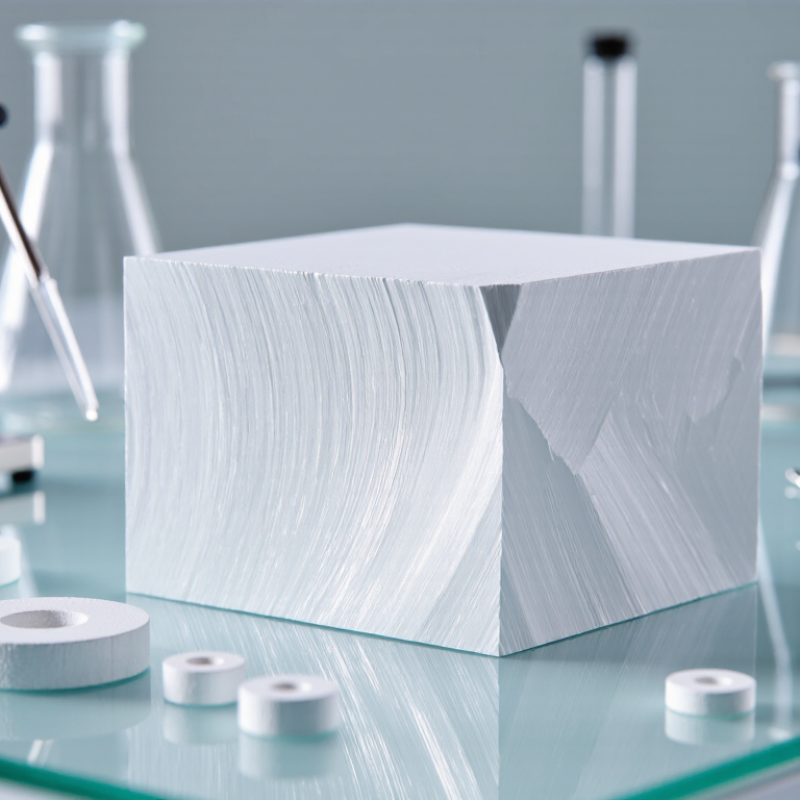
Pure zirconia is zirconium dioxide, a ceramic compound with the formula ZrO₂. Zirconium, by contrast, is the chemical element Zr, usually encountered as a metal. The names sound almost interchangeable, but their properties differ: zirconium metal is silvery and corrosion-resistant, while zirconia is hard, heat-resistant, and electrically insulating. One caveat: “pure” can describe chemical composition, but practical ceramics may contain stabilizing additives.
At room temperature, unstabilized zirconia normally has a monoclinic crystal structure. Heating can change its structure and cause expansion or contraction, which may lead to cracking during cooling. Stabilized zirconia uses small amounts of additives, such as yttria, to help retain useful crystal phases. It is used in dental restorations, oxygen sensors, furnace components, and wear-resistant parts. The USGS Mineral Commodity Summaries 2024 estimated 2023 global production of zirconium mineral concentrates at about 1.4 million metric tons. That figure describes mineral feedstock, not finished zirconia production—a distinction worth keeping clear.
Tips: When comparing materials, check whether a specification means zirconium metal, zirconia powder, or stabilized zirconia. For a ceramic part, ask about stabilizer content and service temperature. Small details matter.
| Dimension | Pure Zirconia | Zirconium |
|---|---|---|
| What it is | A ceramic compound called zirconium dioxide, with the chemical formula ZrO₂. | A metallic chemical element, symbol Zr and atomic number 40. |
| Material type | Oxide ceramic; hard, refractory, and generally electrically insulating at room temperature. | Reactive transition metal; ductile when suitably processed and resistant to corrosion in many environments. |
| Composition | One zirconium atom for every two oxygen atoms; stoichiometric ZrO₂ is about 74% zirconium by mass. | Consists of zirconium atoms; commercial metal may contain controlled alloying elements or trace impurities. |
| Density | About 5.7 g/cm³ for room-temperature monoclinic zirconia; actual ceramic density depends on phase, porosity, and processing. | About 6.5 g/cm³ at room temperature. |
| High-temperature behavior | Melts at roughly 2,715°C. Pure zirconia changes crystal structure as temperature changes, which can cause dimensional changes and cracking during heating or cooling. | Melts at roughly 1,855°C and remains a metal rather than an oxide ceramic. |
| Electrical behavior | A good electrical insulator at room temperature. Oxygen-ion conductivity becomes useful at high temperatures, especially in stabilized zirconia. | Conducts electricity as a metal. |
| Common uses | Used in refractory ceramics and other high-temperature ceramic applications. Many engineering uses, such as oxygen sensors and dental restorations, typically use stabilized zirconia rather than pure zirconia. | Used in nuclear fuel cladding and other nuclear components, corrosion-resistant chemical equipment, and selected alloys and components. |
| Why they are not interchangeable | Its ceramic structure gives it high-temperature stability and hardness, but it is brittle compared with metal. | Its metallic structure allows metal-forming and fabrication processes, but its properties and applications differ from those of zirconia ceramic. |
Note: “Pure zirconia” means zirconium dioxide without intentional stabilizing additives. Stabilized zirconia contains additions such as yttria to help control phase changes and improve performance for specific applications.
Pure zirconia, or zirconium dioxide (ZrO₂), is a dense, hard ceramic. At room temperature, it normally has a monoclinic crystal structure. Heat changes that structure: zirconia becomes tetragonal near 1,170°C and cubic at still higher temperatures. These shifts involve volume changes. In a large, unmodified piece, cooling can create stress and cracks.
Its melting point is about 2,715°C, and its thermal conductivity is low compared with many metals. It also resists oxidation and many corrosive environments. At room temperature, it conducts electricity poorly, though oxygen-ion movement increases at high temperatures. That behavior matters. The word “pure” can mislead: adding small amounts of stabilizing oxides helps retain stronger crystal structures and reduces damage from phase changes. Pure zirconia is therefore useful in high-temperature ceramic and refractory research, while many demanding components use stabilized forms instead. A practical test is to check the material’s composition before predicting how it will behave in a furnace. Numbers alone are not enough. Temperature, part size, and cooling rate all matter.
Pure zirconia, or zirconium dioxide (ZrO2), usually starts as zircon sand rather than a finished ceramic powder. The USGS Mineral Commodity Summaries 2024 estimated global zirconium mineral concentrate production at about 1.4 million metric tons in 2023. This is feedstock, not pure zirconia, and the distinction matters. Producers break down zircon through routes such as alkali fusion or chlorination, then leach and separate impurities. Precipitation produces a zirconium compound, which is washed and calcined to form zirconia powder. Small contamination changes can affect the final material.
Then comes careful powder processing. Milling controls particle size; pressing shapes the powder into a compact; sintering densifies it in a furnace. Temperature and atmosphere depend on purity, particle size, and intended use. For some ceramic parts, manufacturers add stabilizers because pure zirconia can change crystal structure as it cools, risking cracks. Real production is less tidy than a flow chart: washing uses water, separation creates waste streams, and powder can pick up contamination during handling. Purity claims therefore need test methods and batch records, not just a label. The finished material may serve in wear-resistant components, oxygen sensors, or dental ceramics, but each application calls for different processing and quality checks.
High-purity zirconia serves industrial applications where heat, wear, or chemical attack can damage ordinary materials. It is used in some refractory components, crucibles, and specialized ceramic parts. Its high melting point is useful, but pure zirconia changes crystal structure as temperatures shift. That change can cause cracking. The distinction matters.
Many industrial systems therefore use stabilized zirconia rather than chemically pure zirconia. Oxygen sensors, for example, often use stabilized material to measure oxygen levels in hot gases. Stabilized zirconia also appears in thermal-barrier coatings, where a thin ceramic layer helps protect metal parts from heat. Composition and manufacturing quality matter as much as the material’s name.
Medical uses also require careful wording. Dental crowns and bridges commonly use zirconia ceramics, usually stabilized to improve strength and durability. Zirconia-based ceramics are also used in some implant components. Their pale color can resemble natural teeth, and their surfaces can be polished smoothly. But these products are not necessarily pure zirconia. That detail is easy to overlook. A clinician’s choice depends on the patient, the design, and the demands placed on the restoration.
Pure zirconia is zirconium dioxide, a ceramic valued for hardness, heat resistance, and chemical stability. Yet “pure” can be imprecise: many structural parts contain stabilizing oxides that help control zirconia’s crystal phases. Without suitable stabilization, phase changes during cooling can cause expansion and cracking. Small details matter.
Grain size, porosity, and processing conditions shape performance. A dense, finely grained part may resist wear better, while pores or uneven sintering can weaken it. The trade-off is not always obvious. Higher firing temperatures can improve density, but may also encourage grain growth. Service conditions matter too: repeated heating and cooling can challenge a component even when it handles steady heat well.
These factors guide applications. Zirconia-based ceramics appear in dental restorations, cutting tools, wear-resistant components, and some thermal or sensor systems. Dental materials often use stabilized formulations, so their properties should not be assumed to match unstabilized zirconia. For a real component, check the composition, manufacturing method, surface finish, and operating environment. A material data sheet helps, but it cannot fully predict performance in a poorly designed assembly.
Typical flexural strength ranges for dental zirconia by yttria content
Higher yttria content generally increases translucency but reduces strength and fracture toughness. These indicative ranges help explain why stronger 3Y zirconia is often selected for high-load restorations, while more translucent 5Y zirconia is used where appearance is a priority. Actual values vary with composition, processing, and test method.