10 Best UV Board Manufacturers for Global Buyers
UV Board is a broad product category, not a guarantee of identical performance. Boards may differ in their core material, surface finish, thickness, and resistance to moisture or scratches. For buyers, those differences show up in practical ways: an edge chips during cutting, a finish varies between batches, or a shipment arrives later than planned. Small details matter.
This guide introduces 10 UV Board manufacturers for global buyers and offers a starting point for comparing suppliers. It considers factors such as product range, manufacturing capabilities, quality-control practices, export experience, and communication. These points can help narrow a shortlist, but they do not replace independent checks. Request current technical data, confirm available test reports, and review a sample under the lighting and conditions where the board will be used. Ask how the supplier manages color consistency and packaging, too.
Not every buyer needs the same board. A furniture maker may prioritize finish and machining, while a project purchaser may focus on repeat supply and delivery coordination. Requirements can also vary by destination market, so confirm applicable standards with qualified local professionals. A polished website is useful, but it is not proof of dependable production. Be cautious. Supplier information can change, and product claims deserve verification. The right choice is the manufacturer whose documented specifications, sample quality, service, and commercial terms fit your project—not simply the one with the boldest promise.
What UV Boards Are and How They Are Manufactured
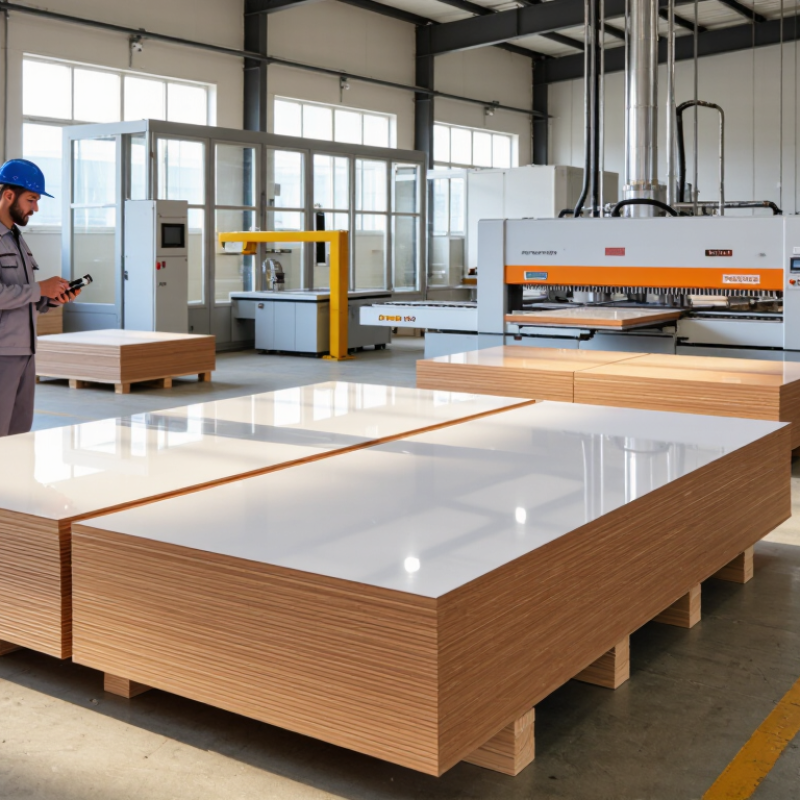
UV board usually refers to a wood-based panel finished with a UV-curable coating. Its core may be MDF, particleboard, or plywood; “UV” describes the surface treatment, not the panel material. That distinction matters. The term is not perfectly standardized across suppliers, so buyers should confirm the core and coating specification.
Manufacturing typically starts with panel cutting, sanding, and dust removal. A primer or sealer helps even out absorption, especially along exposed edges. Rollers or spray equipment apply the coating, which is then exposed to ultraviolet light. Photoinitiators in the formulation trigger rapid polymerization, creating a hard surface. Some production lines add sanding and further coats to improve smoothness and appearance. Small process changes can affect adhesion and gloss; they are easy to overlook.
The FAO’s 2022 forest-products report records about 399 million cubic metres of global wood-based panel production, including products beyond UV-finished boards.
It offers useful industry context, but does not isolate UV boards. Buyers should ask manufacturers for coating thickness, curing controls, and abrasion or adhesion test results, rather than relying on “UV” as a complete quality description.
Key Criteria for Evaluating UV Board Manufacturers
Key Criteria for Evaluating UV Board Manufacturers
A polished face can hide a weak core. Check the substrate, board thickness, flatness, and edge quality across several production batches. FAO’s 2023 forest-products review reported global wood-based panel production of about 402 million cubic metres in 2022. That scale makes consistent specifications and traceable sourcing important. Ask for the batch. Request technical sheets that identify the core material, surface finish, and stated tolerances. Compare those details with physical samples, not just catalogue images.
The coating needs measurable performance. Ask for independent test results covering adhesion, abrasion resistance, and color consistency; ASTM D3359 and ASTM D4060 are examples of relevant methods. Check emissions documentation for the specific board and market, since results can vary by core and supplier.
Test the edges. Inspect samples under bright, angled light for pinholes, uneven gloss, and chipped corners. A supplier’s inspection records, packaging details, and realistic lead times also matter. Confirm how defects are handled, and whether replacement stock can match the original shade. A neat factory audit helps, but it cannot prove every shipment will be identical. That part deserves a little skepticism.
Profiles of 10 UV Board Manufacturers Serving Global Buyers
A useful guide to ten UV board manufacturers should compare their capabilities, not rely on a simple ranking. Global buyers may need different board thicknesses, panel sizes, finishes, and packing methods. One manufacturer might suit large-volume orders, while another handles smaller custom batches. Profiles should also explain production capacity, sample availability, quality checks, and export experience. These details help buyers assess whether a supplier can meet a project’s actual requirements.
The ten profiles can highlight distinct strengths: stable color matching, precise cutting, protective packaging, responsive sampling, flexible order quantities, documented inspections, and clear lead-time estimates. Other useful points include surface durability, moisture performance, customization options, and communication across time zones. Ask how measurements and defects are checked before shipment; a polished product photo is not enough. That comparison is useful, though never perfect. Factory conditions and service can change, so confirm current details directly.
Tips: Request a physical sample and inspect its surface under consistent lighting. Confirm dimensions, finish, packaging, and delivery dates in writing. A small trial order may reveal issues that a brochure misses.
How the Leading Manufacturers Compare in Products and Services
Comparing UV board manufacturers takes more than judging glossy surface photos. Their ranges may include different core materials, thicknesses, finishes, and edge treatments. Check whether the quoted board matches your actual use, such as cabinet doors or wall panels. A useful supplier can explain how its coating handles cleaning, light exposure, and ordinary surface wear. Ask for technical data and a sample from the specified finish. Small details matter.
Service separates manufacturers as much as product choice. Some provide custom sizes, color matching, and cut-to-order panels; others focus on standard sheets and larger production runs. Confirm minimum order quantities, packing methods, production schedules, and how damaged goods are handled. Clear answers are valuable. A polished sample is not proof of batch consistency, so ask how thickness and finish are checked during production. Compare written specifications, not just sales claims.
Communication can reveal practical differences, too. A responsive team should clarify tolerances, lead times, and documentation before you place an order. Ask whether the same finish remains available for future projects. No supplier is perfect. Sample colors may shift under different lighting, and delivery estimates can change, so build room for checking and approval into your schedule.
How to Select and Source UV Boards for International Projects
Selecting UV boards for an international project starts with the finished application, not the catalogue image. A kitchen cabinet panel and a retail display face different demands. Specify board thickness, core material, surface gloss, edge treatment, and expected cleaning method. Ask whether the UV coating is applied to one face or both. Small detail, big impact. A glossy sample may look flawless under showroom lights but reveal scratches beside a window.
Request a sample from the production line, then inspect it under ordinary indoor lighting. Check color consistency, surface pinholes, edge quality, and whether the coating chips during cutting. Ask suppliers for recent test reports and confirm which board construction and finish those reports cover. Documents matter. Do not assume a report for one thickness applies to every option. A simple written specification helps prevent substitutions that are difficult to spot until installation.
For cross-border sourcing, confirm sheet dimensions, tolerances, pallet quantities, protective packaging, and shipping terms before approving an order. Ask how boards are separated and wrapped; corner damage can turn a good batch into unusable stock. Verify that product documents meet the destination market’s requirements with a qualified local importer or adviser. Lead times can shift. Build room for sampling and inspection, especially when production schedules are tight. One uncomfortable lesson: the lowest quotation may exclude packaging or replacement handling, so compare the full delivered cost.